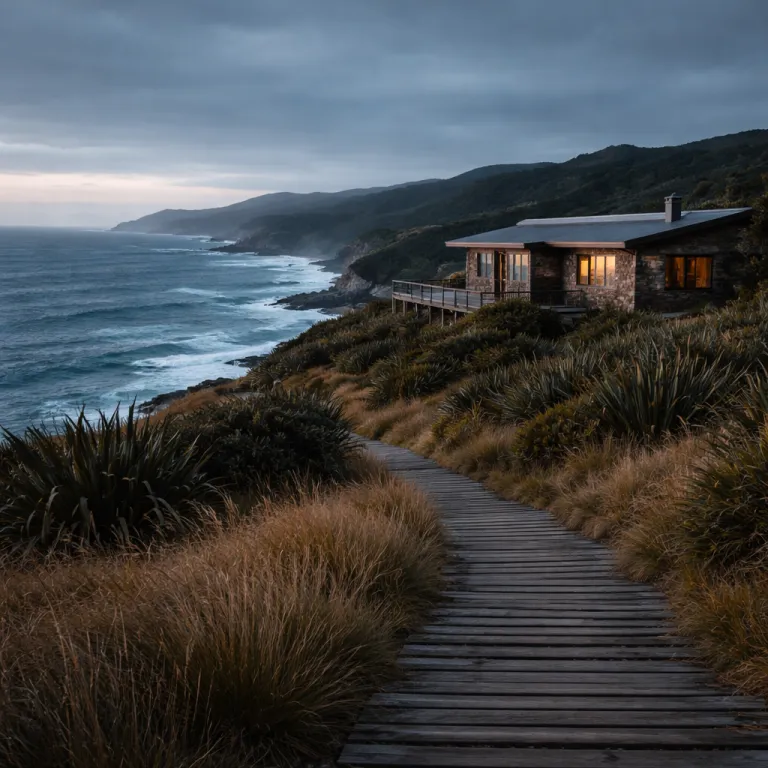
What off grid lodge New Zealand luxury really means for local travellers
Off grid lodge New Zealand luxury has shifted from gimmick to guiding philosophy. Across Aotearoa New Zealand, a new generation of lodge owners is building quietly in the bush, on the island fringes and along remote rivers, where the promise is simple: the Wi-Fi drops and the view arrives. For a New Zealand traveller used to constant coverage, that first night without a signal can feel both unsettling and deeply liberating.
In practice, an off grid lodge in New Zealand might run on solar, a mini hydro system or carefully managed generators, yet still offer a super king bed, a proper wine glass and a hot shower. Maruia River Retreat in the northern South Island, owned and operated by Filippo and Bibi Zambolin, is a benchmark, with its 500 acre private rainforest, its own small hydro plant and a Gold Qualmark certification that underlines how eco friendly systems can sit comfortably beside high end service. This is off grid lodge New Zealand luxury as infrastructure: power is generated on site, waste is handled carefully and the architecture is oriented to New Zealand nature rather than the nearest cell tower.
Digital detox thinking is not unique to New Zealand, and operators in the United States have been refining the model for years through hike in places such as Charit Creek Lodge in Tennessee or Sperry Chalet in Glacier National Park. Their approach is clear: “No Wi-Fi or cell service,” “Remote locations,” and “Minimal modern amenities.” New Zealand lodge owners have taken that same spirit and layered in local hospitality, from a breakfast included hamper of Central Otago fruit to a fire pit stocked with mānuka for a slow burning night under the stars. As one Wellington guest wrote in a 2023 visitor book at Maruia, “I came for the hot tub and stayed for the silence – I did not open my laptop once.”
Glass eco cabins and purepod stays on the South Island
If you want to feel surrounded by New Zealand nature without sacrificing a super king mattress, the glass eco cabins scattered across the South Island are a strong place to start. The PurePod concept, including the Kokomea PurePod near Kāpiti and several South Island PurePod sites such as Greystone in Waipara and Pōhue near Port Levy, wraps you in glass on three sides and overhead, so you sleep seemingly outside yet remain warm, dry and cocooned. Each PurePod sleeps two, sits alone in native bush or farmland and turns every night into a private observatory for the Milky Way.
At these cabins, off grid lodge New Zealand luxury translates into solar power, rainwater collection and low impact waste systems, but also a proper kitchen, a powerful shower and often a discreet hot tub on the deck. You arrive by walking a short track through native bush or paddocks, then step into a lodge like space where glass walls frame hills, ocean views or braided rivers, and where the only screen is the sky. Many guests book online from the North Island or from within the South Island, then learn quickly that once you are on site, your phone becomes a camera rather than a lifeline.
Further south, glass eco cabins on Banks Peninsula and around Kaikōura lean into the same idea, pairing floor to ceiling glass with thick insulation and careful siting to catch sunrise over a bay or sunset behind the ranges. Some owners reference the cinematic landscapes of The Lord of the Rings films, but the real drama is the silence when the generator clicks off and the stars take over. For travellers planning a wider South Island loop, pairing a glass eco stay with a refined lakeside escape such as the options profiled in this guide to Tekapo hotel stays for New Zealand travellers seeking refined lakeside luxury creates a satisfying contrast between deep seclusion and gentle civilisation.
Remote coastal and island lodges where the signal fades out
New Zealand’s coastal geography lends itself naturally to off grid lodge New Zealand luxury, especially on the edges of the South Island and around Stewart Island Rakiura. Here, the best lodges sit back from the bay, tucked into native bush, with long views across water that doubles as both highway and moat. When the last boat leaves or the helicopter thumps away, you are left with ocean views, a private deck and the kind of silence that makes every night feel longer in the best way.
On Stewart Island, small lodges and eco cabin style retreats often operate on limited power, with generators timed for evening use and solar topping up during the day. A typical lodge sleeps only a handful of guests, offers a super king bed dressed in heavy linen and opens onto a veranda where you can watch kiwi forage at the bush edge, all while remaining comfortably off grid and eco friendly. Many of these places include breakfast included in the tariff, then encourage you to spend the day on fly fishing missions, coastal walks into Rakiura National Park or boat trips that reveal how completely you are surrounded by native forest and sea.
Along the Kaikōura coast and into the more remote corners of the New Zealand south coastline, you will find lodges that sit above a secluded bay, reached by gravel road or sometimes only by farm track. Here, off grid lodge New Zealand luxury might mean a cedar hot tub sunk into the deck, a fire pit ringed with river stones and a glass fronted living room that frames migrating whales or dusky dolphins. For those planning a Fiordland or Te Anau based journey, combining such a coastal stay with the more connected yet still nature focused options outlined in this overview of Te Anau hotel accommodation for New Zealand travellers seeking refined comfort gives you both ends of the spectrum in a single trip.
Forest, river and national park retreats built for digital detox
Move inland and the off grid lodge New Zealand luxury story becomes one of rivers, valleys and deep bush. Properties like Maruia River Retreat show how a lodge can sit within its own pocket of rainforest, bordered by a clear river that invites fly fishing by day and fire pit gatherings by night. Here, the lodge sleeps only a small number of guests in villas spaced through native bush, each with a super king bed, a private deck and often a hot tub positioned to catch the last light on the beech trees.
Across both the North Island and South Island, similar eco cabin retreats have sprung up on the fringes of national park boundaries, from the edges of Kahurangi to the approaches to Tongariro. They are not rough huts; they are carefully designed cabins where glass walls pull the forest inside, where breakfast included hampers arrive at your door and where the only online activity is perhaps loading a downloaded map before you leave the carpark. Many of these lodges are deliberately out of cell range, so you learn to treat the night sky, the river noise and the rustle of native bush as your evening entertainment.
Internationally, the rise in digital detox vacations and the growing demand for nature based retreats has been tracked by operators who note that average daily phone usage in the United States now exceeds four hours, according to data from analytics firms such as DataReportal and eMarketer, which both reported figures above that threshold in 2023. That context helps explain why the New Zealand version of off grid lodge New Zealand luxury feels so timely, especially for domestic travellers who want to stay within Aotearoa yet feel far away from their inbox. When you are standing on a swing bridge deep in a valley, with no signal and only the river below, you understand why a lodge that is surrounded by native forest and powered by its own systems can feel more indulgent than any urban penthouse.
How to book, prepare and choose your level of disconnection
For New Zealand based travellers, the practical side of off grid lodge New Zealand luxury starts long before you arrive at the lodge gate. Most of these properties are easiest to book online, and many will send detailed pre arrival notes that explain driving times, last fuel stops and exactly how limited the connectivity will be. Read those notes carefully, then learn to treat the journey as part of the experience rather than a hurdle to be rushed.
Before you leave, tell your office or whānau that you will be genuinely offline for at least one night, sometimes several, and set clear expectations about when you will next check messages. Pack as if you are heading into light backcountry: layers for changeable weather, a head torch for moving between lodge and eco cabin after dark, and any specific snacks or drinks you want beyond what the breakfast included or dinner provisions cover. Many lodges provide a hot tub, a fire pit and generous indoor spaces, so a good book, a deck of cards and a willingness to sit still will serve you better than another device.
Choosing between North Island and South Island options often comes down to the kind of New Zealand nature you want to wake up to, whether that is a secluded bay, a high country river or dense native bush. If you are drawn to dark skies and vineyard country, the curated guide to where to stay in the Wairarapa, lodges, vineyards and dark sky country is a useful companion to this off grid focus, showing how you can mix deep seclusion with more classic wine country stays. The paradox is clear: you are paying luxury rates for fewer amenities on paper, yet the combination of privacy, silence, New Zealand nature immersion and the rare permission to be unreachable is precisely what makes these lodges feel like the most indulgent nights you can book in Aotearoa.
FAQ
What is a digital detox lodge and how does it differ from a standard hotel ?
A digital detox lodge is an accommodation that intentionally removes or limits digital connectivity, usually offering no Wi-Fi and little or no cell reception. The focus is on immersion in nature, simple but comfortable amenities and activities like walking, fly fishing or stargazing rather than screen based entertainment. In contrast, a standard hotel typically prioritises constant connectivity, multiple entertainment options and proximity to urban services.
Are off grid lodges in New Zealand suitable for solo travellers ?
Many off grid lodge New Zealand luxury properties work very well for solo travellers, especially those who value quiet and time in nature. Look for lodges that offer hosted dinners, shared fire pit spaces or guided activities, as these create natural opportunities to meet other guests without sacrificing privacy. If you are nervous about isolation, choose a property that is remote but still road accessible rather than one that requires a long hike in or a boat transfer.
How do I book an off grid lodge and what should I check before confirming ?
The simplest way to book is usually through the lodge’s own website or a trusted New Zealand focused booking platform, where availability and minimum night stays are clearly shown. Before you confirm, check the exact location, driving time from your home or last stop, what is included in the rate and how limited the power and connectivity will be. It is also wise to ask about cancellation policies, seasonal access issues and whether breakfast included or dinner provisions are part of the tariff.
What should I pack for an off grid stay in New Zealand ?
Pack as you would for a comfortable but remote weekend, with layered clothing, sturdy shoes, a waterproof jacket and a warm layer for cool nights. Add a head torch, any personal medications, a good book, offline maps on your phone and perhaps a small power bank if the lodge’s charging options are limited. Most off grid lodge New Zealand luxury properties provide quality linen, towels and basic kitchen supplies, so you rarely need to bring more than your preferred snacks and drinks.
Do off grid lodges compromise on comfort because they are eco friendly ?
In New Zealand, the best off grid lodges use eco friendly systems to enhance comfort rather than reduce it, relying on solar, hydro or efficient generators to power high quality lighting, heating and hot water. You can expect super king beds, well designed bathrooms and often luxuries such as a hot tub or generous glass fronted living spaces, even when the property is fully off grid. The main trade off is usually connectivity and sometimes appliance choice, not the standard of sleep or overall comfort.